

October is when most agencies feel the holiday rush coming. Holiday ad budgets go live in November, social calendars fill up and year-end reports land in December. If your team is already full, the question is simple. Can you onboard an offshore hire in time?
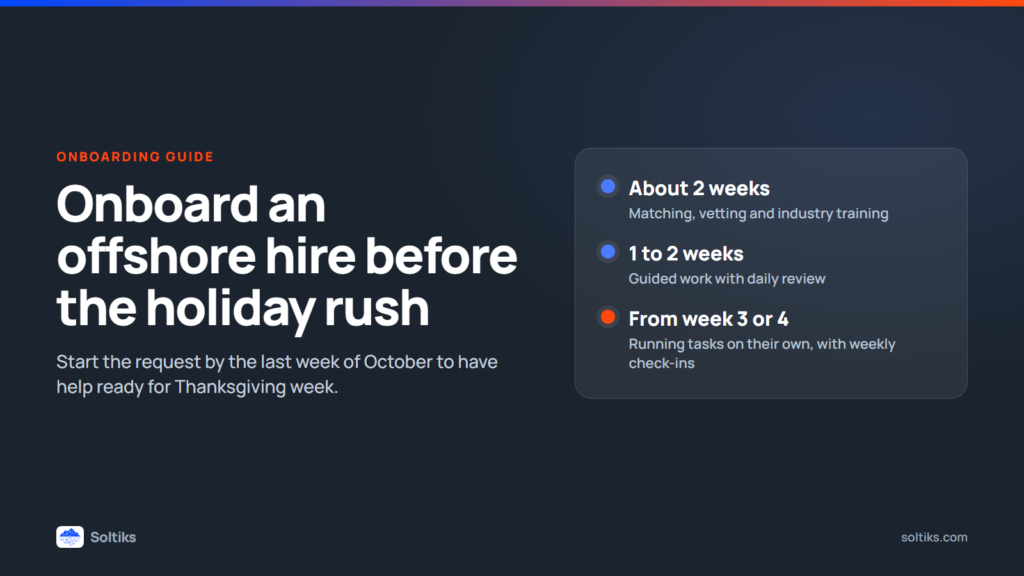
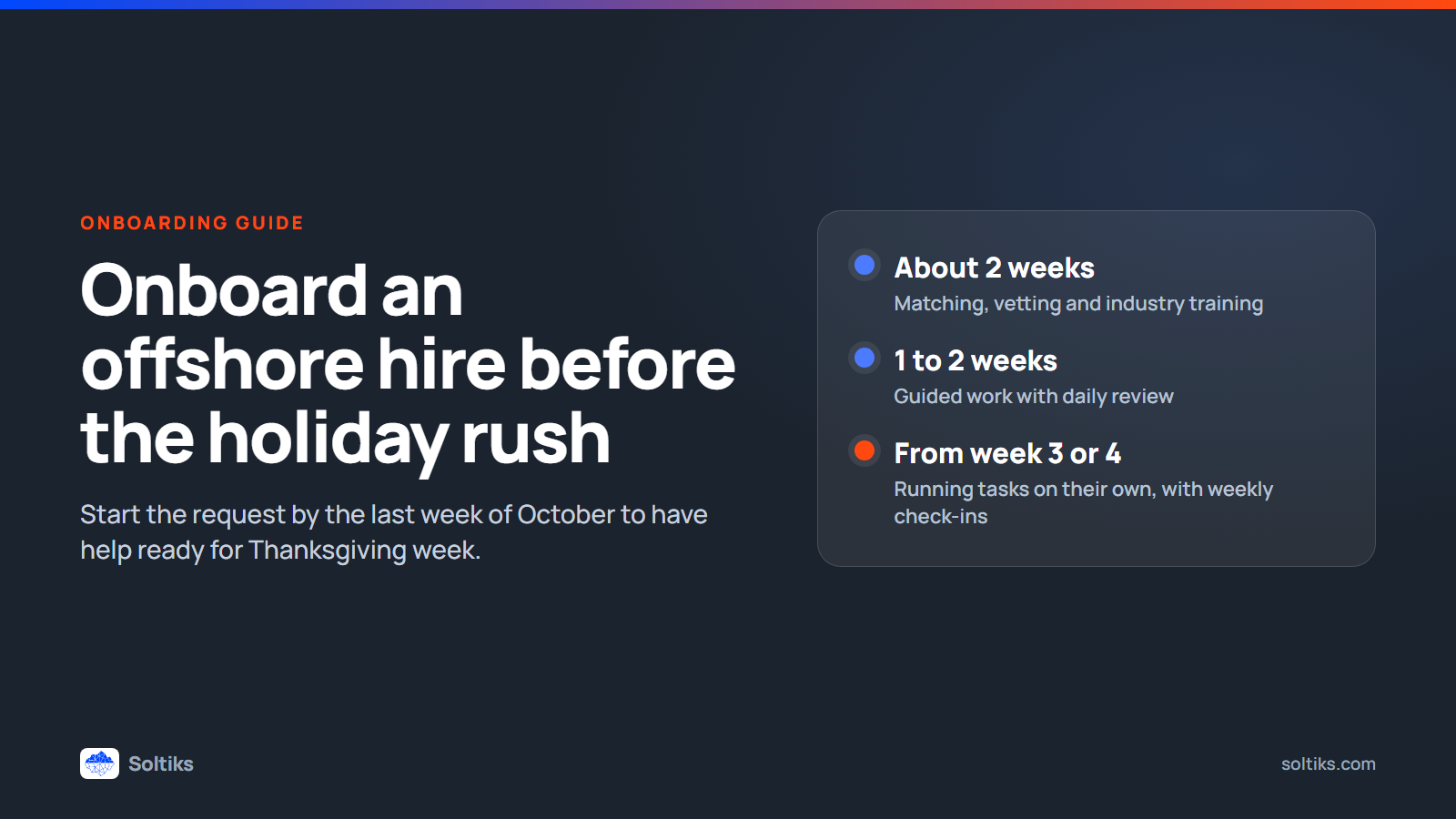
Usually, yes. With a staff augmentation partner, plan on about two weeks to place and train the hire, then one to two weeks of guided work before they run tasks alone. To have help ready for Thanksgiving week, start the request by the last week of October.
How Long Does It Take to Onboard an Offshore Hire?
Onboarding an offshore hire happens in two parts. The partner finds, vets and trains the person. Then your agency brings them into your accounts. Both parts take time, and the second one is where agencies lose the most days.
| Stage | Planning time | Who owns it |
|---|---|---|
| Role brief and kickoff call | 1 to 2 days | Your agency and the partner |
| Matching, vetting and industry training | About 2 weeks at Soltiks | The staff augmentation partner |
| Logins, tools and process handoff | First 2 to 3 days on the job | Your agency |
| Guided work with daily review | 1 to 2 weeks | Your agency and the new hire |
| Running tasks on their own | From week 3 or 4 on the job | The new hire, with weekly check-ins |
At Soltiks, the matching and training stage takes about two weeks, and each associate is trained for your industry before day one. The rest of the timeline depends on how ready your agency is.
The partner’s two weeks are fairly fixed. Your side is the part you control, and it’s where a prepared agency gains back the most time. Logins, process notes and a named contact can all be ready before the hire’s first day.
What Is the Latest Date to Start Before Thanksgiving?
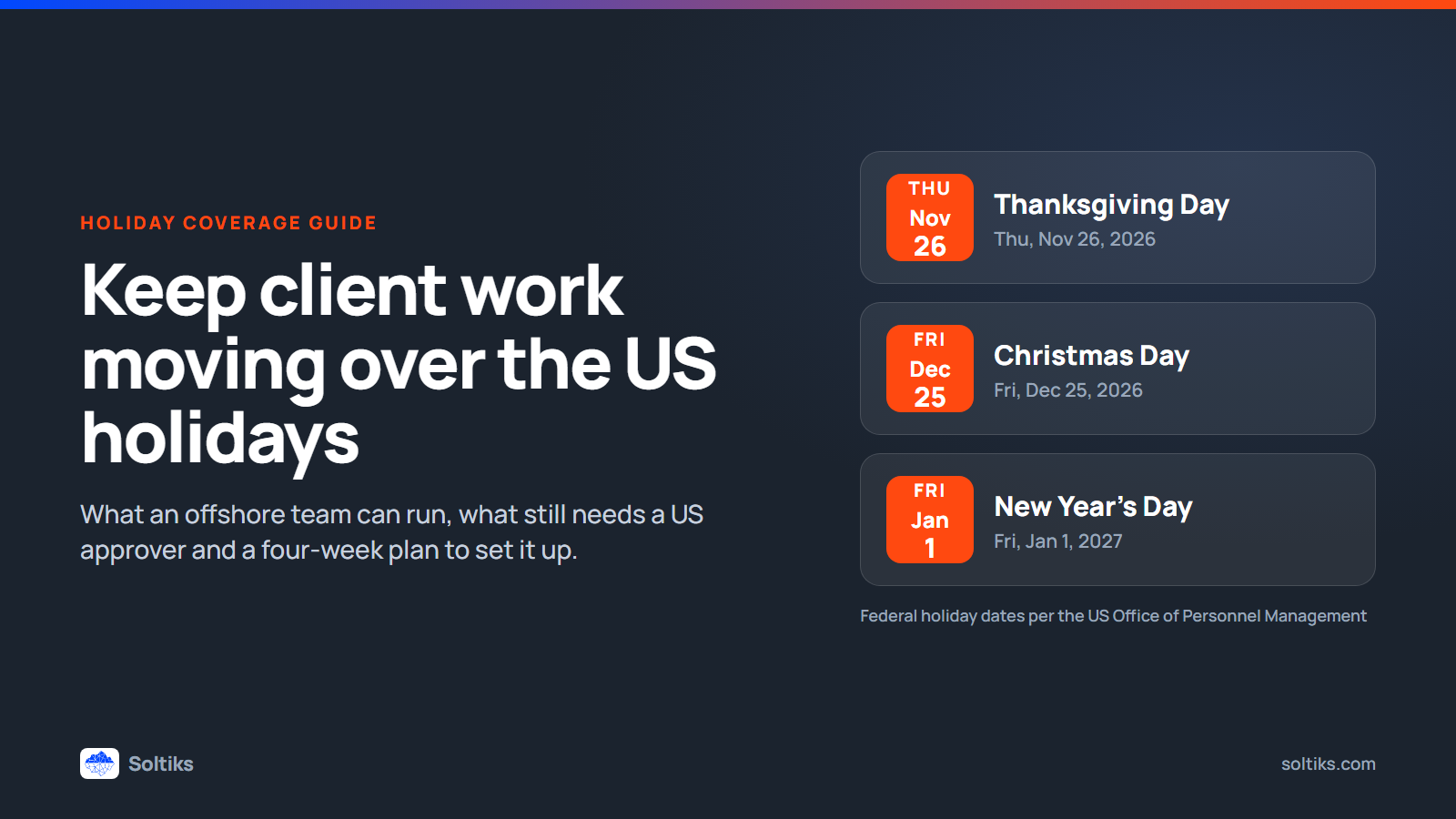
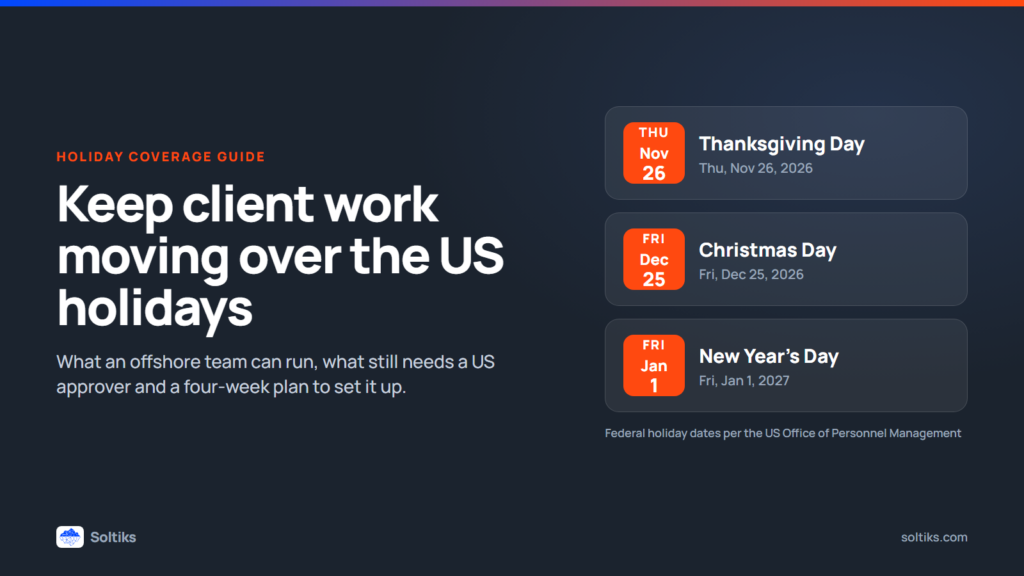
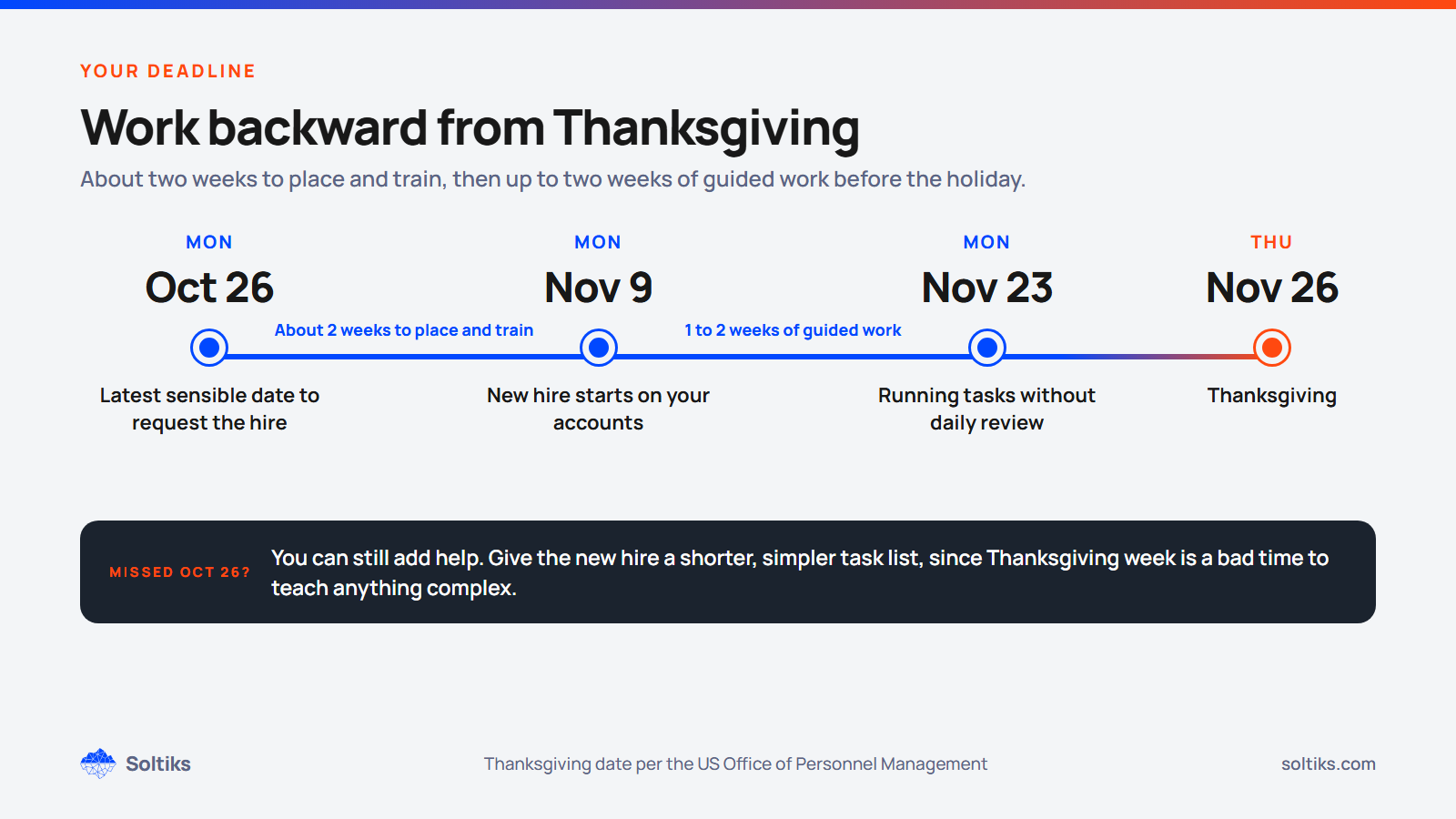
Thanksgiving falls on Thursday, November 26, 2026, according to the US Office of Personnel Management. Work backward from that date to find your own deadline.
- Monday, October 26 is the latest sensible date to request the hire
- Monday, November 9 is when the new hire starts on your accounts
- Monday, November 23 is when they should run tasks without daily review
Miss the October date and you can still add help. Just give the new hire a shorter, simpler task list. Thanksgiving week is a bad time to teach anything complex.
Writing a Role Brief That Speeds Up Matching
The role brief is the first thing a staff augmentation partner works from, so a clear one saves days. A vague brief like “we need a marketing person” leads to back-and-forth before matching can even start.
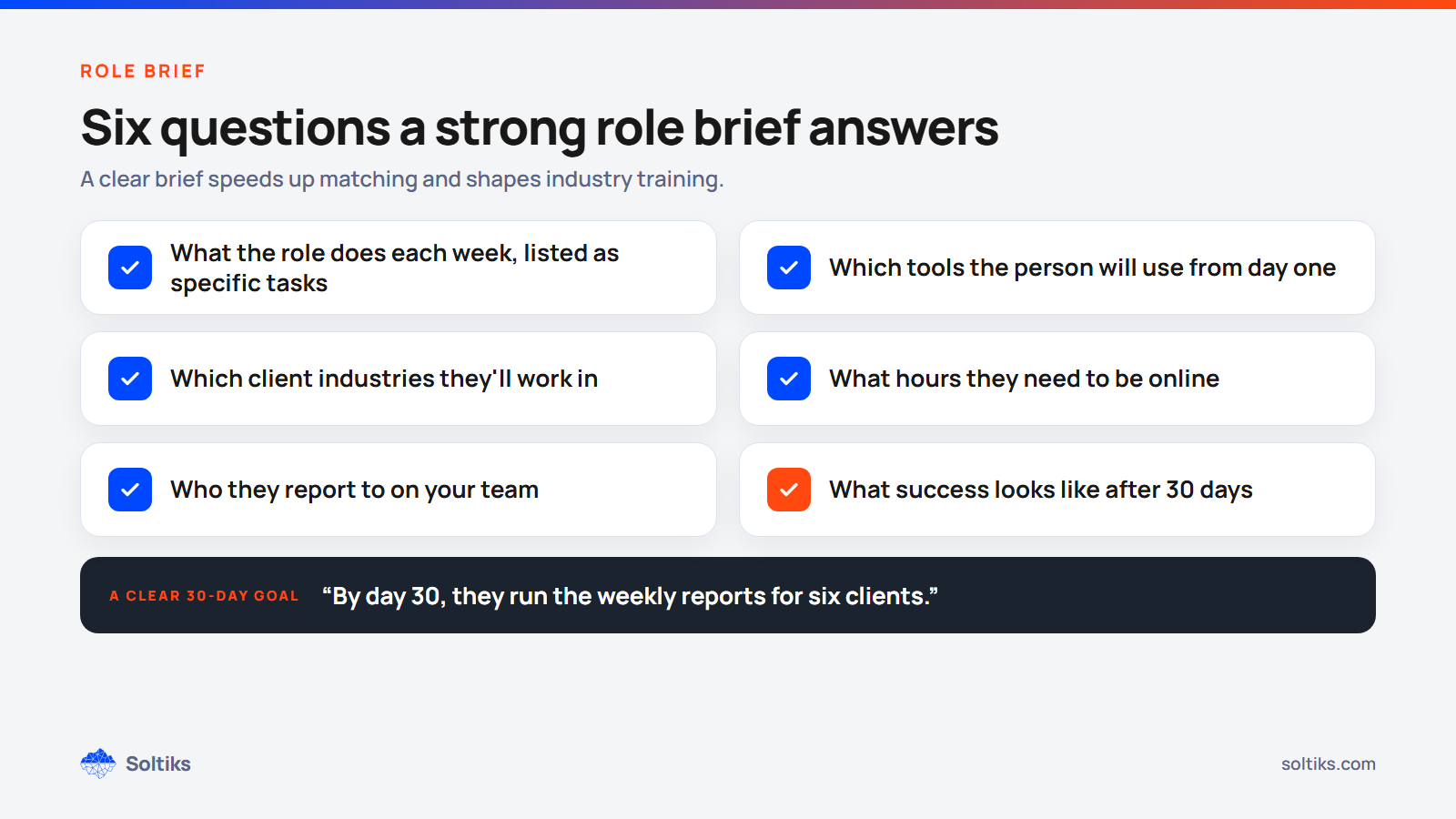
A strong brief answers six questions.
- What the role does each week, listed as specific tasks
- Which tools the person will use from day one
- Which client industries they’ll work in
- What hours they need to be online
- Who they report to on your team
- What success looks like after 30 days
That last point matters most. When you can say “by day 30, they run the weekly reports for six clients,” everyone knows what the first month is for. At Soltiks, the brief also shapes industry training, so the associate arrives knowing your clients’ world.
Which Roles Can Help Fastest in the Holiday Rush?
The fastest roles to onboard are built on clear, repeatable tasks. If you can write the job as a checklist, a new hire can pick it up fast. Our guide on which roles to hand off first covers the order. These four fit the holiday season best.
Media Buyers for Holiday Ad Spend
Holiday budgets move fast. A campaign that drifts for a weekend can waste a client’s money. A media buyer who follows your pacing rules can check spend every day and fix problems before Monday.
Social Media Managers for Seasonal Calendars
Holiday content needs to go out on time for every client. A social media manager can schedule approved posts, track comments and keep each calendar full through December.
Virtual Assistants for Reports and Admin
Year-end reports, data entry and meeting notes eat into your senior team’s week. A virtual assistant can take that load from day one. Those tasks are easy to document and check.
Graphic Designers for Holiday Creative
Holiday campaigns need ad graphics, social images and email banners in many sizes. A graphic designer working from your brand files can turn these around on a steady schedule while your creative lead approves the final versions.
Roles built on client trust, like your lead account contact or your strategist, take longer to hand over. Keep those roles with your core team through the holidays, and add support around them instead.
Example 30-Day Goals by Role
A 30-day goal turns the role brief into something you can check. Each one below is specific enough that you’ll know at a glance whether the new hire is on track.
| Role | A clear 30-day goal |
|---|---|
| Media buyer | Runs daily pacing and budget checks on every assigned account |
| Social media manager | Schedules each client’s posts a week ahead and logs comments daily |
| Virtual assistant | Prepares weekly reports and meeting notes without reminders |
| Graphic designer | Delivers resized holiday creative within the agreed turnaround |
Goals like these make the week-four review simple. They also show the new hire what good work looks like from the first day.
Five Things That Slow Down Offshore Onboarding
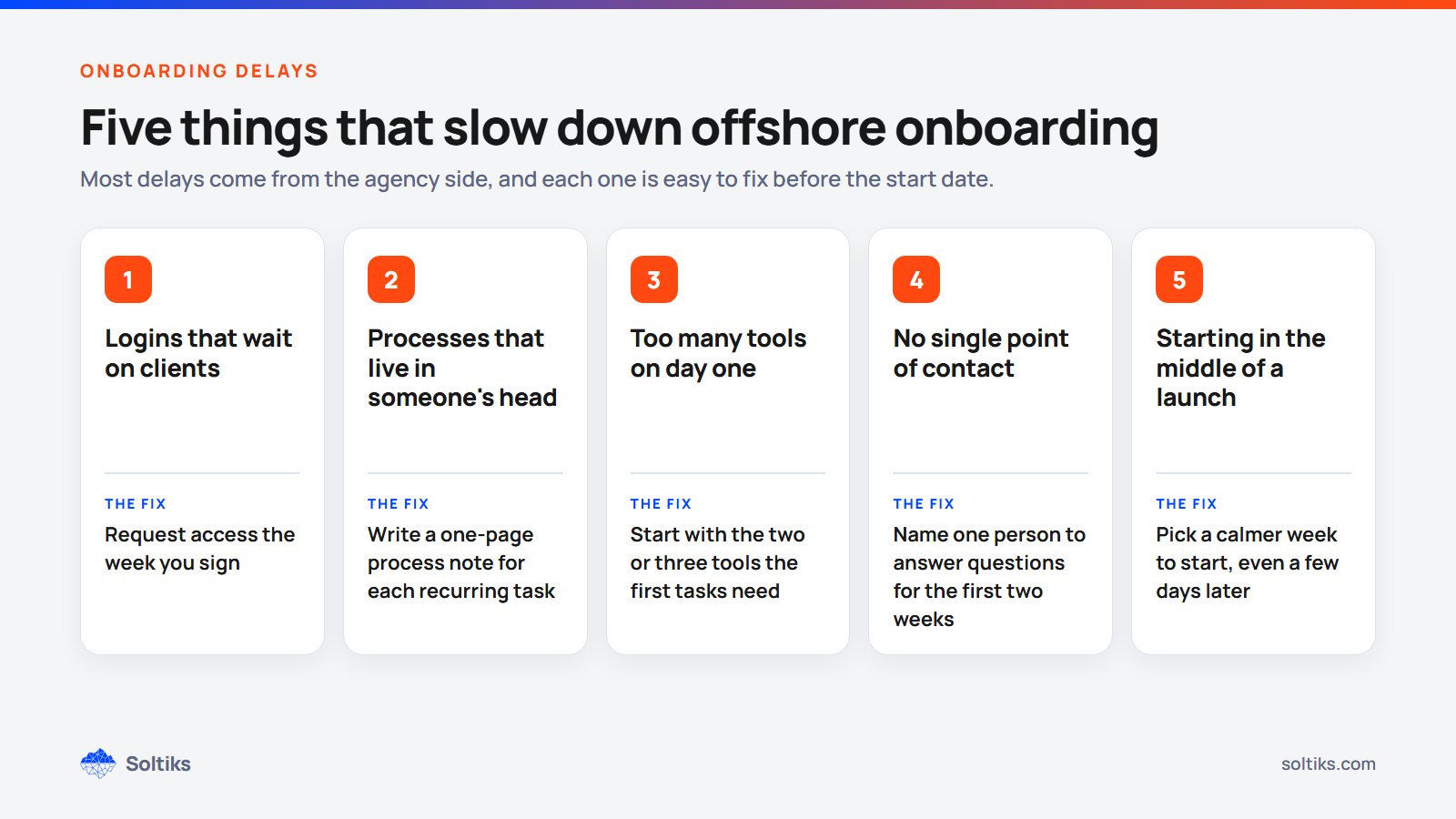
Most delays come from the agency side, not the hire. Each of these is easy to fix before the start date.
Logins That Wait on Clients
Some client accounts need the client to approve a new user, and that can take days. Request access the week you sign, and turn on multifactor authentication for every new login. The Cybersecurity and Infrastructure Security Agency recommends it because a stolen password alone can’t open the account.
Processes That Live in Someone’s Head
If a task only exists in one person’s memory, the new hire has to learn it by watching. A one-page process note for each recurring task shortens that learning time. It also gives the new hire something to check against.
Too Many Tools on Day One
New hires slow down when they get every tool at once. Start with the two or three tools their first tasks need. Add the rest as their work grows.
No Single Point of Contact
A new hire who doesn’t know who to ask will wait instead of acting. Name one person on your team to answer their questions during the first two weeks.
Starting in the Middle of a Launch
A new hire who starts during a big client launch gets very little teaching time. Pick a start date in a calmer week, even if it’s a few days later, so someone can actually train them.
How to Prepare Your Agency Before the Hire Starts
A little prep before day one saves a week later. Have these ready before the new hire’s first morning.
- Logins with multifactor authentication for every tool on the first-week list
- A one-page process note for each recurring task
- Two or three examples of finished work that meet your standard
- A first-week task list that starts with low-risk work
- A weekly check-in slot on both calendars
Put all of this in one welcome doc with links, login steps and the names of the people to ask. A new hire who can find everything in one place gets to useful work sooner.
A First-Two-Weeks Plan for a New Offshore Hire
The first two weeks set the pace for everything after. A clear plan keeps the new hire busy with useful work while you build trust in their output.
| When | Focus | Review level |
|---|---|---|
| Day 1 | Logins, a tour of your tools and team introductions | A check-in at the end of the day |
| Days 2 and 3 | Reading process notes and watching tasks being done | Questions answered as they come up |
| Days 4 and 5 | Simple tasks on one or two accounts | Every task reviewed before it goes out |
| Week 2 | Recurring tasks across more accounts | Spot-checks plus one weekly check-in |
Keep the first tasks small and repeatable, such as a weekly report or a batch of scheduled posts. Each finished task gives you something concrete to review, and quick feedback at this stage prevents habits you’d have to undo later.
Handing Off Client Accounts Without Confusing Clients
Clients care less about who does the work than about whether it stays consistent. A careful handoff keeps that consistency, even when a new person joins the account right before the holidays.
Keep the Lead Contact the Same
The person clients already trust should stay their main contact. The new hire supports that person behind the scenes at first, then takes on client-facing tasks once the work is steady.
Introduce the New Hire by Name
A short note from the lead contact explains who the new person is and what they’ll handle. Clients who know the name are more comfortable when a report or message arrives from them.
Copy the New Hire on Routine Threads
Adding the new hire to routine email threads lets them learn each client’s tone and preferences. It also means fewer gaps if the lead contact is out over Thanksgiving.
How Can You Tell Onboarding Is Working?
By the end of week two, the new hire should need fewer answers and produce work you send with light edits. By week four, recurring tasks should run on schedule without reminders.
Watch three simple signs.
- Rework is dropping, with fewer tasks coming back for fixes
- Questions are changing, from “how do I do this?” to “which option do you prefer?”
- Deadlines hold without you chasing them
If a sign isn’t moving by week three, look at the process notes before you look at the person. Most slow starts trace back to an unclear task, a missing login or too many tools at once.
Should a Holiday Hire Be Short-Term or Long-Term?
It depends on whether the rush is a one-time spike or a sign that your team is too small. If the extra work ends in January, a short-term plan may fit. If you’ve been short-handed since summer, the holidays are just showing you the gap.
Our guide to short-term vs long-term staff augmentation walks through that choice. Either way, Soltiks bills monthly with no initial fees. Our contracts carry a 30-day notice period, so you aren’t locked in past the season.
If you do keep the hire past January, none of the onboarding work is wasted. The process notes, logins and client introductions you set up now become the base for a bigger role in the new year.
Frequently Asked Questions About Onboarding an Offshore Hire
Can an offshore hire start in less than two weeks?
Plan on two weeks. At Soltiks, placing an associate and training them for your industry takes about two weeks. Skipping that training usually costs more time later. If you need help sooner, give the new hire a narrow task list and add more once they know your accounts.
Who should manage a new offshore hire day to day?
One named person on your team, usually the account lead or operations manager whose work the hire supports. That person answers questions, reviews early work and runs the weekly check-in. Keep it to one manager for the first month, so instructions stay consistent.
Do offshore hires work US business hours?
Many do, and you should confirm it before you sign. Soltiks associates work full-time, 8 hours a day and five days a week, usually 9 to 5 US Eastern. Other working hours can be arranged if your clients sit on the West Coast or in Canada.
How do you check a new hire’s work during the busy season?
Use a weekly check-in and a short list of quality checks for each task. Review closely in the first two weeks, then step back as the work stays consistent. Soltiks also shares a monthly performance sheet, so you can see how each associate is doing over time.
What if the new hire isn’t the right fit?
Raise it early, ideally in the first two weeks, with clear examples of what’s missing. Soltiks has a replacement guarantee. If an associate doesn’t meet your expectations, we provide a replacement and help close any gaps. Early feedback keeps your holiday plan on track.
How do you choose a staff augmentation partner quickly?
Ask how they vet and train people, how long placement takes, what hours their team works and what happens if a hire leaves. Clear answers to those four questions tell you most of what you need. Our guide on how to choose a staff augmentation company covers the rest.
Why Choose Soltiks to Onboard an Offshore Hire Before the Holidays?
Soltiks helps US and Canadian marketing agencies add vetted, full-time offshore professionals to their teams. Our talent pool is ready before you call, which is why matching and industry training can be done in about two weeks.
Each associate works as a dedicated member of your team, follows your processes and works your US hours. Want help in place before Thanksgiving? Let’s build your team this month, so there’s time to train before the rush.